
How the ‘Burn’ got its title as the ‘Street Art Capital of the World.’
Intro
Before Melbourne was crowned the street art capital of the world, it was something else entirely. It was grittier, messier, and pretty darn tough. I didn’t just watch that shift happen. I lived through it. For ten years, from 2007 to 2017. I was in it, shoulder to shoulder with the people who built it, letter by letter, wall by wall. But this story doesn’t start in the 2000s. It goes all the way back to the 1970s, when Melbourne’s graffiti scene first took root in the shadows.
Late 1970s – 1980s – Beginnings in the Backstreets
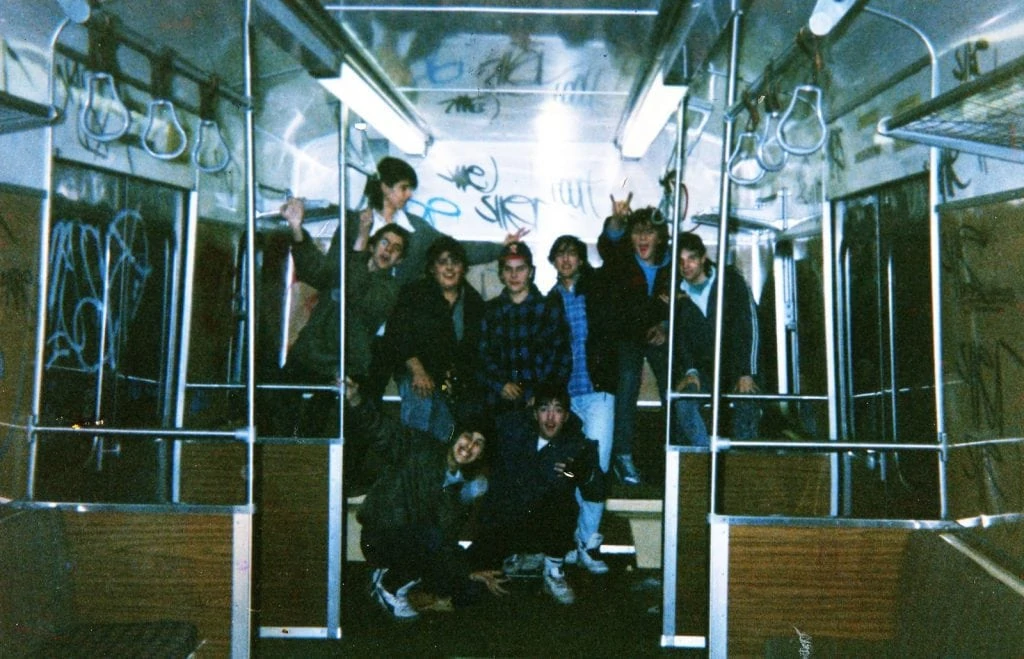
Graffiti in Melbourne began as an echo of New York’s subway scene. But it wasn’t long before that turned into a roar of artists hitting up alleyways, under bridges, and across the backs of moving trains, a deadly gamble that’s claimed a few lives. But it wasn’t for nothing, the goal. To become the most prolific crew in the city.
It started with tags in defiance on the grey walls of a growing city. Inner-city kids from Fitzroy, Richmond, Collingwood, and beyond were influenced by hip-hop, punk, breakdancing, and a hunger to be seen. The paint was always stolen, and respect was earned.
The train system became the underground gallery. And there were no spectators, just writers, cops, and the streets.
1980S – 1990S: CREWS, CODES, AND CULTURE
By the ‘80s, the scene had solidified. Crews began forming: DMA, USA, aka C2F, WCA, RDC + KSA each crew with its own identity, but they all knew there was a code, and you learnt it real fast, or you get eaten up. Don’t go and cap a better artist. Don’t bite another writer’s style. You tag high, and you know who is who. And if you throw up some toy piece over a known writer? Don’t be surprised when it disappears before morning, and you have a crew out for you. The Frankston, Belgrave, and Upfield lines were warzones and canvases all at once. Full-car panels were a mark of fearlessness. The Melbourne Loop became legendary! Dark, dangerous, and utterly essential.
Writers like Prime, Dunit, Dskiz, Peril & Paris, Duel, were pushing boundaries, bringing in wild styles, fades, 3D letters, and creating noise that demanded attention. They were the innovators.
Indeed, the legacy of these 80s-90s crews laid the foundation for Melbourne’s later reputation as a street art capital.
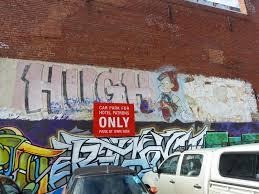
Hugh Dunit
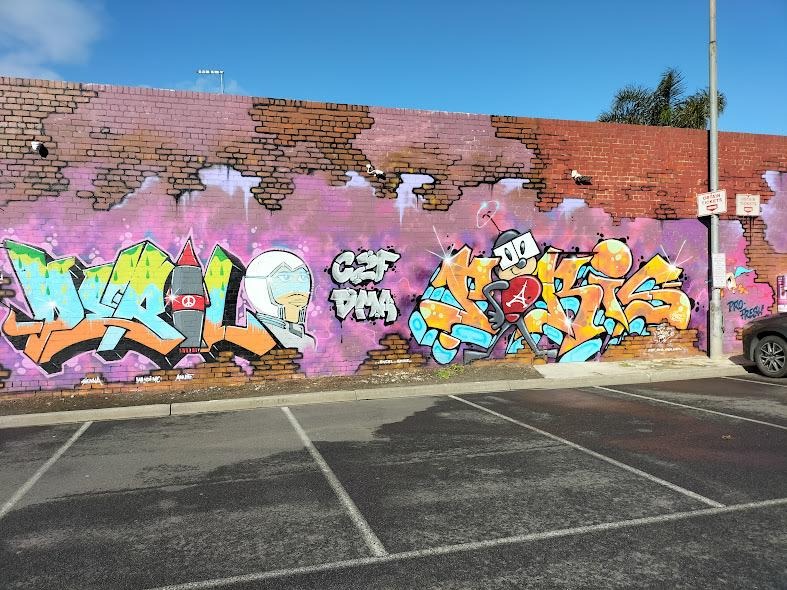
Peril and Paris
1990S – EARLY 2000S: STYLE WARS AND LEGACY BUILDING – THE GOLDEN AGE
By the late ’90s, graffiti had morphed into something bigger… still illegal, still rebellious, but increasingly technical and intentional. Letterforms got more complex. Character work was emerging.
Crews weren’t just painting; they were laying down their legacy that was earning international acclaim. Melbourne had built its own
language, its own rhythm. And despite increased policing, graffiti wasn’t slowing down. It was evolving.
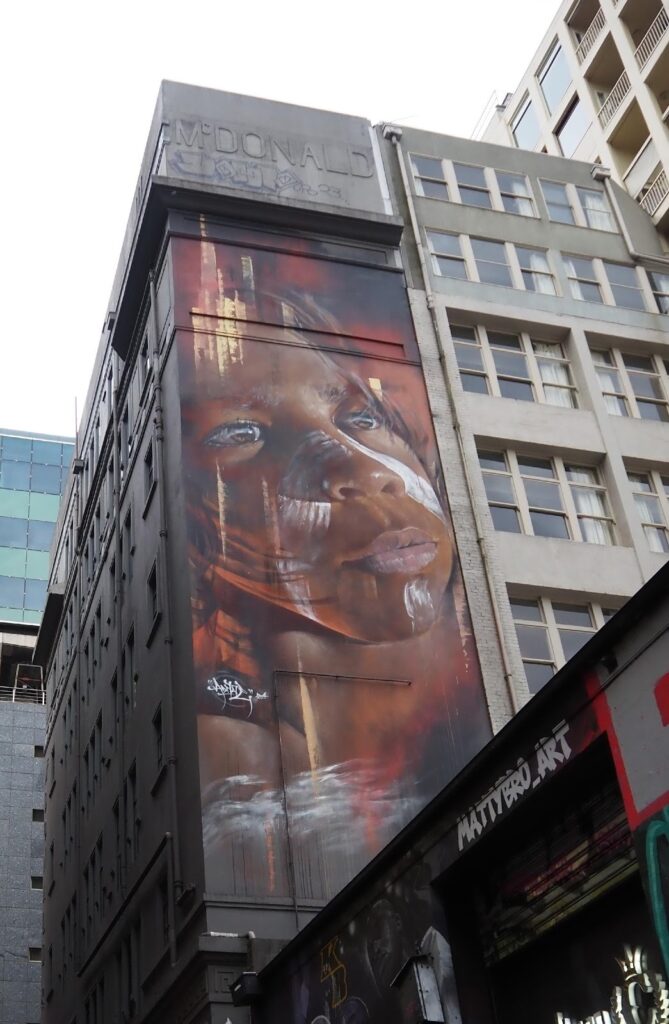
Writers like Rone, Dvate and Adnate, became staples of the scene, each with their own signature, each defining an era. And while the rest of the city tried to scrub it clean, graffiti just dug in deeper.
MY ERA: 2007 – 2017
This is when I found my footing.
Not as a writer, but as someone immersed in the scene. A close friend to many. A documenter. A late-night lookout. A lover of the craft and the chaos.
I was surrounded by some of the most prolific writers in the city, the kind who could pull off full burners blindfolded. I watched pieces go up in Balaclava laneways, on the backs of Cheltenham factories, and high above Richmond rooftops, where you had to climb to claim your voice.
I knew the codes. The politics. The thrill of a clean wall. The sting of a toy going over a masterpiece. We spent our nights in alleyways, abandoned warehouses, and rooftop car parks. With paint on our hands and sketches in our pockets.
This was still pre-Instagram fame. No time-lapse reels. Just cans clinking in backpacks and the question: You coming out tonight?
THE GREAT DIVIDE: GRAFFITI VS STREET ART
Around 2010, everything began to shift.
Graffiti was suddenly rebranded as “street art.” Councils began offering grants. Festivals popped up. Laneways once considered “trash zones,” became public attractions.
I watched as writers who once ran from police were now being asked to paint legal walls. Some saw opportunity. Others saw betrayal. The tension between traditional writers and the rising wave of muralists and stencil artists grew thick.
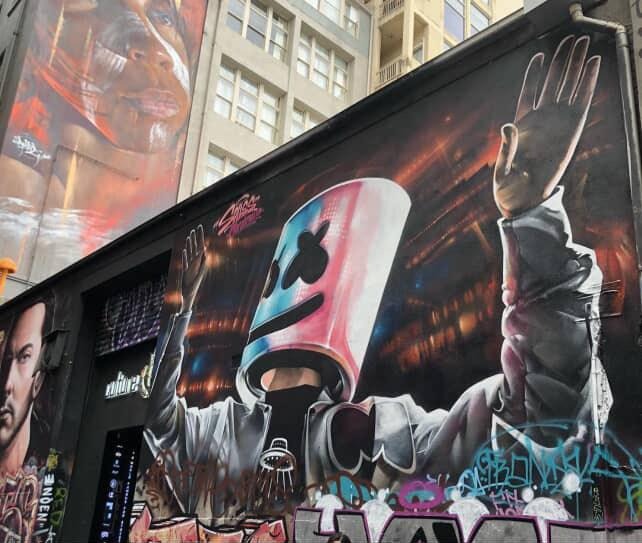
Hosier Lane became the battleground. On the surface, it was celebrated, but for many, it felt like a sanitized version of something that was born of fire.
Still, the scene adapted. Some writers crossed over. Others doubled down, keeping it raw, illegal, and underground.
THE SPIRIT LIVES ON
Today, you’ll find gallery-trained muralists brushing shoulders with 16-year-old kids tagging trains at midnight. And every one of them, in some way, is part of the same lineage, the same unspoken language. Melbourne’s walls are more than concrete; it’s a living library. Covered. Recovered. Layered again. Every tag, lay-up, and piece. Every drip, a memory.
I’ve seen pieces get painted over by giants. I’ve seen artists rise from back-alley tags to festival spotlights. I’ve watched entire neighborhoods evolve through spray paint.
Melbourne didn’t become number one in the world by accident. It became number one because it never stopped creating. And in the quiet hours, under the hum of streetlights, you can still smell fresh paint and spot a couple of nozzles left behind.
– Geordana
